European Union leaders begin another two-day summit in Brussels today to try to fix the eurozone crisis, just as Greeks embark on another general strike – the 20th since the country's debt crisis began. The timing of the summit is auspicious: the EU has just won the Nobel peace prize – a move which struck many as a little odd, given the current state of turmoil across Europe.
But credit where it's due: European integration has turned the continent from a centuries-old cauldron of bubbling political, religious and ethnic hatreds into a quarrelsome but, until recently, mostly prosperous confederation of neighbours. And even though the union is facing daunting challenges now, the idea that underpins it – of nations living and working together in a more peaceful way – is still an inspiring one.
So let's consider this as a moment of opportunity, rather than cynicism. What can the EU do to strengthen its leadership in the world and help fulfil the promise of the European experiment? Here are six ideas.
1) Invest in people, don't hobble them with austerity
The stubborn attachment of European leaders to the bankrupt austerity mania is doing more to undermine security, stability and peace than just about anything else in Europe right now.
The tragic unraveling of Greece is a terrifying look at what's ahead on this path. A retired pharmacist publicly shoots himself in the head because, after a life of working and paying taxes, he doesn't want to have to eat out of garbage cans. Black-shirted neo-fascist thugs beat up foreigners, intimidate journalists and elected officials and hold "white Greek only" food giveaways and blood donation drives. There are reports of police outsourcing immigration enforcement to this extreme-right Golden Dawn party. When it's hard to tell where your police end and the neo-Nazis begin, you've got a seriously dangerous situation on your hands.
With Brussels ratcheting up the pressure on debtor countries to make more savage cuts to pensions and social services, causing soaring unemployment and even deeper recession, can Spain be far behind? Portugal? Italy?
It doesn't have to be like this. If the billions demanded from struggling European countries to repay investors and banks were instead focused on growing those economies – putting people to work, for example, to build the green infrastructure Europe needs to thrive in the 21st century – wouldn't this be one of many saner paths to security and prosperity?
2) Bring in a Robin Hood tax
The financial sector has grown grossly out of proportion to its useful place in a modern society. Making a killing by manipulating obscure "financial instruments" is replacing making a decent living by creating goods and services of real value. Add in the fact that the richer these guys get, the more crooked they become – not to mention the fact that when their bubble bursts, we all go down with it – and it's clear that taking a tiny piece of the action from that immensely profitable casino and putting it to work for the good of society is a solid, sensible and achievable step forward.
3) Commit to green farming
The Common Agriculture Policy (CAP) is the Jolly Green Giant of the EU budget. About 40% of all the money the EU spends goes to support farming. Sadly, attempts last year to wean the CAP away from environmentally damaging agribusiness and towards more sustainable practices didn't succeed. Proposals to promote biodiversity, reduce chemical use, protect natural systems and more ended up watered down by lobbyists in member states until they were nearly meaningless.
How we grow and transport food, and how we take care of the land that feeds us, are crucial questions for the future of Europe and the rest of the world. To put the short-term profits of entrenched interests ahead of wise policies risks our food security, our health and the health of the natural world we depend on.
4) Get more women in the boardroom. Make it law
Women can bring a host of strengths to the business world, yet despite years of voluntary efforts to boost female presence in the boardrooms of Europe, only 3.2% of European corporate heads are women, and they hold fewer than 14% of board seats across the continent.
A number of EU countries including France, Spain and Italy already have gender equity quotas. And Norway's has been working fine for years.
European justice commissioner Viviane Reding says the voluntary approach to breaking up the boys' club in the boardroom has been tried and failed. And while she doesn't like quotas, she says, "I like what quotas do. Quotas open the way to equality and they break through the glass ceiling."
The Netherlands, the UK and other countries say they want to be left alone to work on gender equity at their own pace. At the current pace it'll take at least two generations for women to catch up.
Europe deserves better. The EU should get behind Reding's proposals to require 40% of board members to be women by 2020.
5) Play fair with the Roma
Europe's largest minority group is overwhelmingly poor and widely discriminated against. The estimated 10 to 12 million Roma in Europe are stigmatised and trapped in a cycle of exclusion from education, housing and employment that perpetuates their poverty and exclusion. Former centre-right French President Nicolas Sarkozy scored law and order points with voters by breaking up Roma encampments and shipping thousands of people back to eastern Europe. The European commission threatened legal action, saying Sarkozy was violating EU human rights laws. He relented, but now his Socialist successor Francois Hollande is, outrageously, doing pretty much the same.
In 2005, 12 countries announced the Decade of Roma Inclusion and launched splashy programmes meant to, after centuries, bring the Roma in from the cold. Lots of agencies and international organisations hopped on board, including the World Bank, the Council of Europe and the UN Development Programme. Seven years into that decade, the Roma are still being chased across the continent.
It's time for EU leaders to stop shifting the blame and playing to age-old prejudices. They need to quit illegally deporting families and get serious about implementing the existing plans to help these citizens truly integrate into a modern Europe.
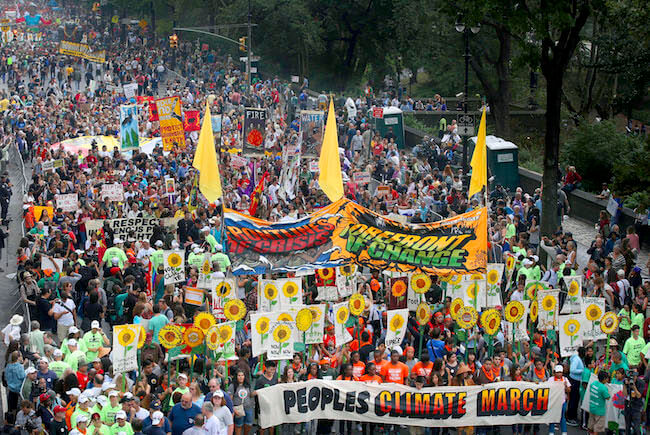
6) Rededicate to fighting climate change
The EU is proud of its global leadership on climate change. And it has a right to be. The EU has some of the most comprehensive climate change policies on Earth. The European emissions trading scheme is the only continent-wide cap and trade system for curbing planet-warming carbon dioxide. And EU climate commissioner Connie Hedegaard has probably done more to advance negotiations on the global climate change treaty than any single person.
But the EU is faced with backsliding from the US and ongoing "you-go-first, no-you-go first" bickering between the Bric countries and the west at the UN climate treaty talks. Its centrepiece cap and trade system is foundering, not to mention nearly the entire world rebelling at EU aircraft emission rules.
These signs all point to a Europe that's losing its leadership mojo on this crucial issue. As the clock ticks down to the expiration of the Kyoto Protocol, it's time for the EU to get that momentum back.
Best path forward? Europe needs to stand its ground on aircraft emissions; bleed the excess carbon permits out of the cap and trade system to get it back on course; and proceed with plans to fold shipping and other transport sectors into the emissions scheme to reduce greenhouse gases as well.
Bottom line is ...
Europe can't force the rest of the world to follow its lead. But as the world's largest economy, Europe has the clout, as well as the moral authority, to show leadership and set the pace on fixing a host of the problems facing our world.
Read more: Timothy Garton Ash makes the case that despite the current troubles, Europe can and must rededicate itself to its vision of unity.
Sources: Avaaz, Guardian, Friends of the Earth Europe, Bizsale, EurActive, Der Spiegel, Global Post, Economist, Free Speech Radio News, Irish Times, Wikipedia, European Roma Rights Centre, Financial Times, EU Observer, AFP, NY Times