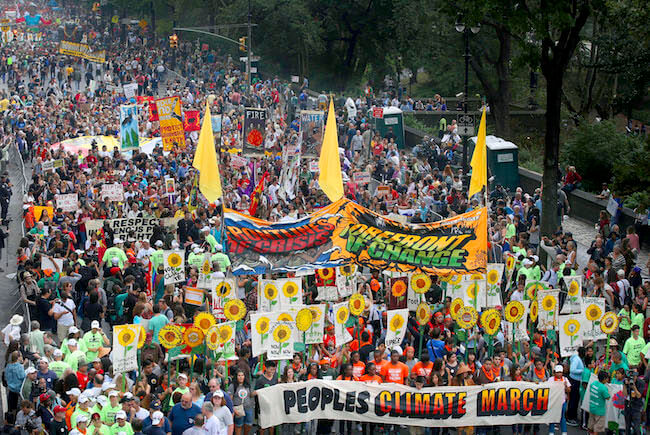
Last year, following a long-distance march by indigenous protesters and an international uproar, Bolivia's president promised permanent protection for the Amazon. Soon after, Evo Morales announced he was cancelling the contract to build a superhighway through a protected area in the heart of the Amazon – the famous Tipnis national park. But, behind closed doors, Morales is still mulling ways to get the highway built. Once again indigenous groups and activists are mobilising against it.
Citizens march
The planned superhighway, to be built by the Brazilian multinational OAS, would connect the departments of Cochabamba and Beni – part of a projected link between Brazil's Atlantic coast and Peru's and Chile's ports on the Pacific. Supporters say it would bring badly needed economic development. But it would also cut through the Isiboro Sécure National Park and Indigenous Territory (Tipnis) – a sensitive ecological area which sits on valuable oil deposits. The Programme for Strategic Investigation in Bolivia estimates that if the highway went ahead, over 64% of Tipnis would be deforested (Sp) by 2030.
Last year, indigenous people and citizens marched 500km to La Paz, Bolivia's capital, to protest against the road. Along the way, they were attacked and beaten by police. But their courage – backed by nearly 500,000 Avaaz members – achieved a fantastic victory: President Morales suspended work on the road, and signed a law to preserve Tipnis.
Flip-flopping, again
Not everyone was happy, though. In a poor region with limited job opportunities, some were ready to fight for short-term economic growth even if it meant long-term environmental destruction. And those environmental costs could be huge: a 2009 study published in the journal Economic Botany noted that 84% of species in Tipnis are "useful" to local people; a second study published in Biodiversity and Conservation concluded that certain plant species only grow in specific parts of the reserve. As a result, deforestation, even on a small scale, could cause irreversible loss of plant life – and loss of those plants' potential contributions to science and medicine.
In January of this year, a group of pro-highway protesters marched on La Paz: they wanted the economic benefits of the road. The protesters included some of Morales' key supporters: coca-growers from the Chapare region, where he began his career as a union leader. In February, Morales caved in to their demands, agreeing to a new consultation process, with the aim, ultimately, of reviving the project.
Indigenous communities, angered by Morales' flip-flop, planned yet another march to safeguard Tipnis. It started yesterday. Morales, stuck between two important constituencies, has again agreed to "annul" the contract, citing failures on the part of the OAS rather than indigenous opposition or environmental damage.
Where now?
It's clear that Morales remains conflicted. He wants to build the road through the Tipnis national park, but he also wants to make it look like a legitimate decision by the people, and not his own will. That could jeopardise everything the indigenous communities have fought for: the security of Tipnis and its unique wildlife. But global citizens everywhere can still raise their voices in support of Bolivia's indigenous communities as they march to protect this sanctuary.
Take action: Let's make sure that this destructive superhighway doesn't get built. Sign the Avaaz petition to save the Amazon.